


A rail and a drawer
The dresses hang on a rail at eye level, the layers live in a drawer below it, and the two were chosen so that any layer can go under any dress. A size run is measured on a body rather than a form, and the note on each card says which dress a layer was tested with. Eight pieces is enough for a working week, and short enough that every one of them can be checked properly before it is sent.


Washed before it is photographed
What the edit is for
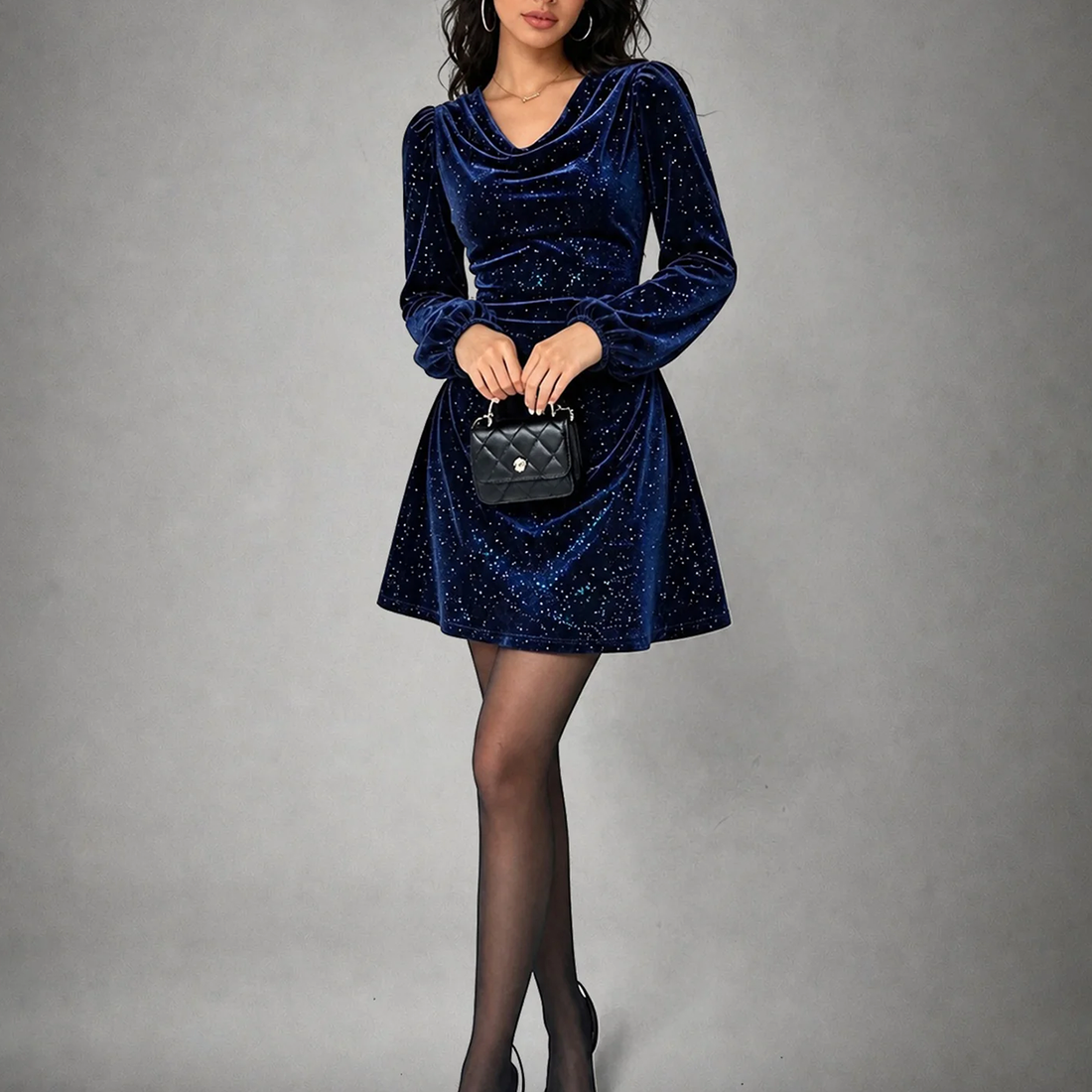
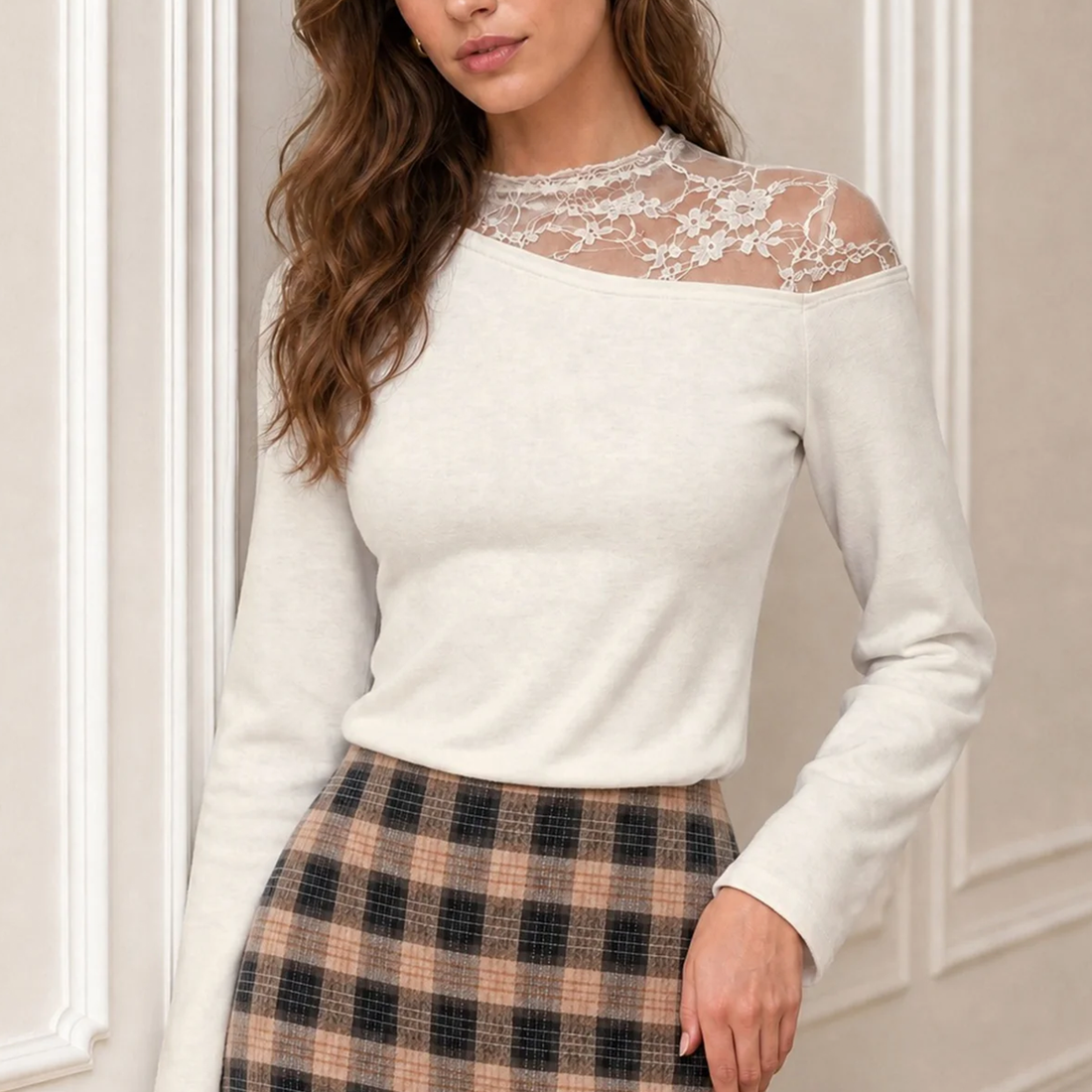
Every piece is washed once at thirty degrees before it is photographed, because a viscose that shrinks will shrink in your machine too and the photograph should show the version you will actually own. Colour is checked against a card after that wash, and anything that moved more than a shade is re-dyed or dropped. The velour is brushed in one direction before packing so the pile lies flat in the box, and the lace trim is pulled gently at the seam to make sure it is stitched through and not merely laid on top.
Cuff, hem, seam

Cuffs are stretched over a wrist and released, and the ones that do not come back to shape are re-knitted. Hems are levelled on a body rather than a table, because a bias panel hangs differently once it is worn. Seams are pressed open and then checked from the inside, since a seam that has been overlocked too tightly will pull the surface into a ridge after the second wash. The soft layers are folded flat in tissue, never hung, so the shoulder does not grow in the wardrobe.
What the edit is for
Clothes for a real week
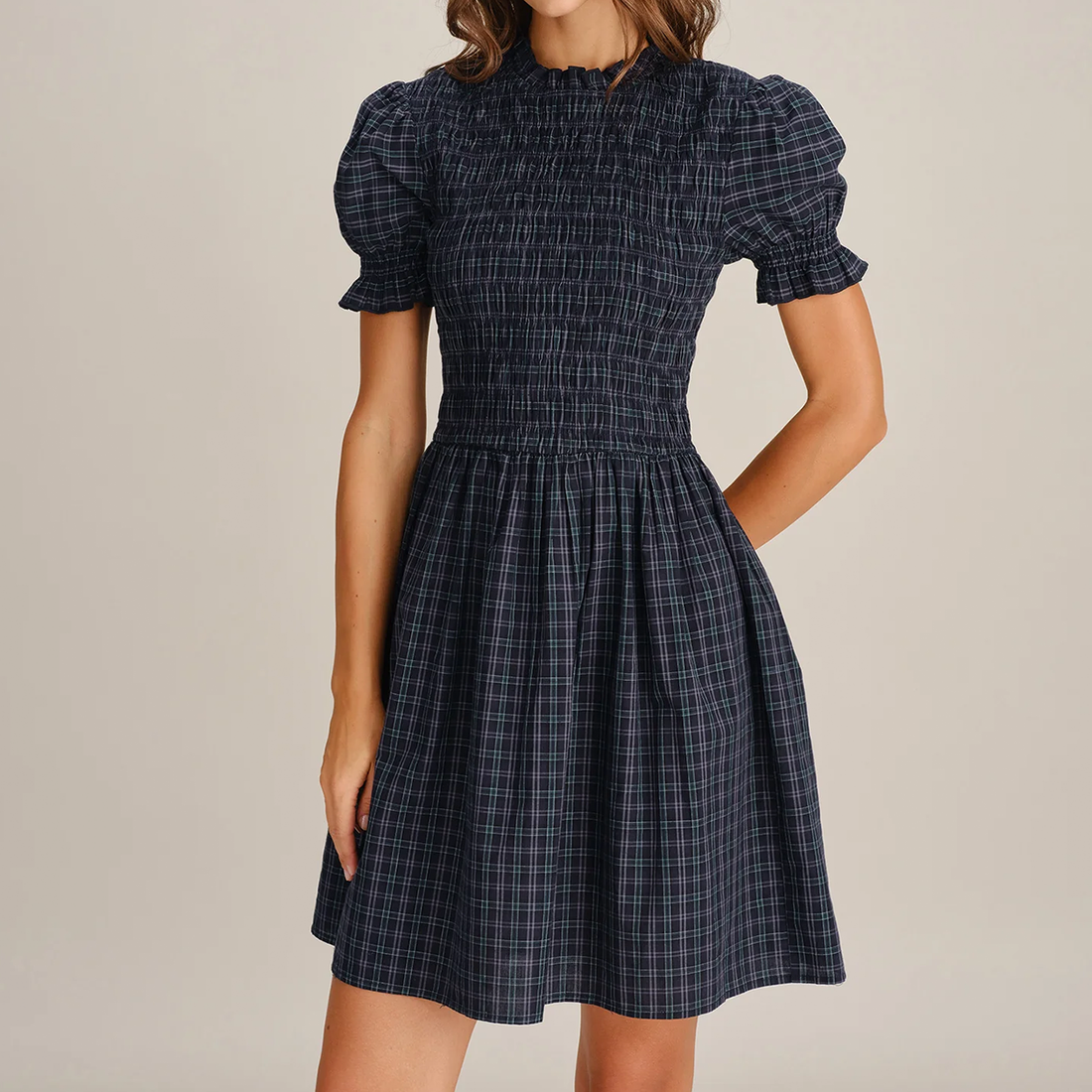
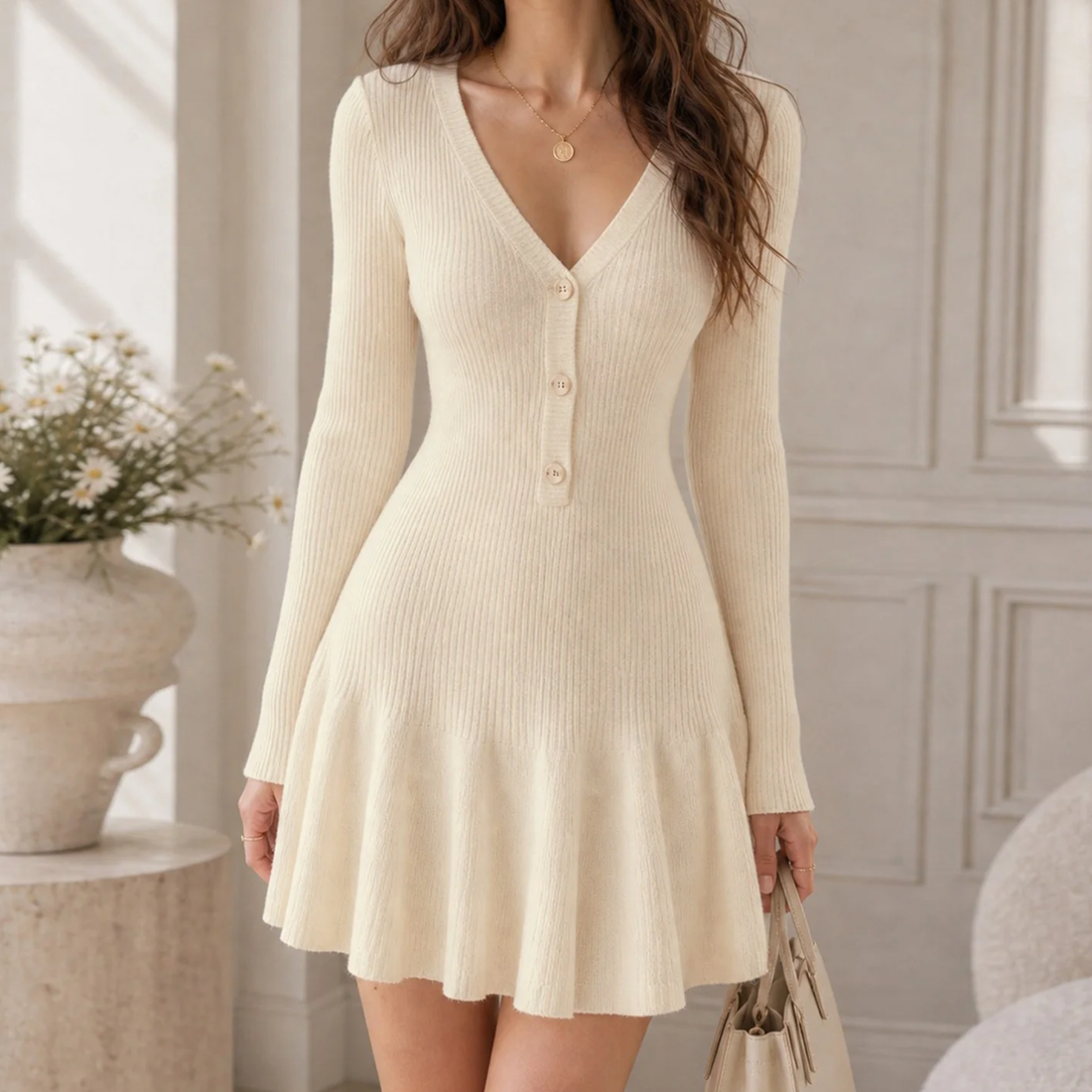
The four dresses were chosen for the days that are not occasions: a Tuesday with a commute and a dinner at the end of it, a Saturday with a market and a train. The layers were chosen to sit under them without adding a shape, which is why they are fine, close and plain. The palette stays inside teal, coral and cream so that a navy plaid can be worn with an apricot dress and a pink V-neck in the same week without a single decision going wrong at seven in the morning.

The drawer in use
The apricot sweater dress over the beige turtle lace, the collar sitting just above the neckline and the sleeve hidden so the dress keeps its line. The layer is fine enough that the dress does not pull across the chest, which is what the size run on a body was for.
 Layer sits under the dressPink Long Sleeve Seriously Soft Lace-Trim V-Neck Tee
$39.99
 Hem clears the kneeDeep Green V Neck Puffed Long Sleeve Spliced Ruched Solid Top
$45.99
 Cuff recovers after wearBrown V Neck Lace Shirred Puffed Long Sleeve Tee
$54.99
Before it is posted
Size run on a body
Every dress is measured on a person as well as a form, and the card states the shoulder, the chest and the finished length in centimetres.
Folded, never hung
The soft layers travel flat in tissue so the shoulder keeps its line, and the dresses are folded along the bias with the hem supported.
A real answer on sizing
Ask whether a layer will sit under the velour dress and the reply is the chest measurement of both, not a suggestion to take the larger one.
